
What Is Paid Digital Advertising?
Paid digital advertising is any online promotion you pay to show to a chosen audience. It includes search ads, social media ads, display banners, video ads, influencer partnerships, and more. Unlike organic marketing, it can create visibility quickly, while giving you control over budget, timing, message, and targeting.
For a business that needs steadier leads, paid ads can help you reach people who are already searching for a solution or likely to care about what you offer. The key is to set a clear goal, target the right audience, send clicks to a useful landing page, and measure results such as cost per lead, cost per sale, and return on ad spend. By controlling your spend thresholds and testing distinct ad variations, you can quickly learn which value propositions resonate with qualified prospects.
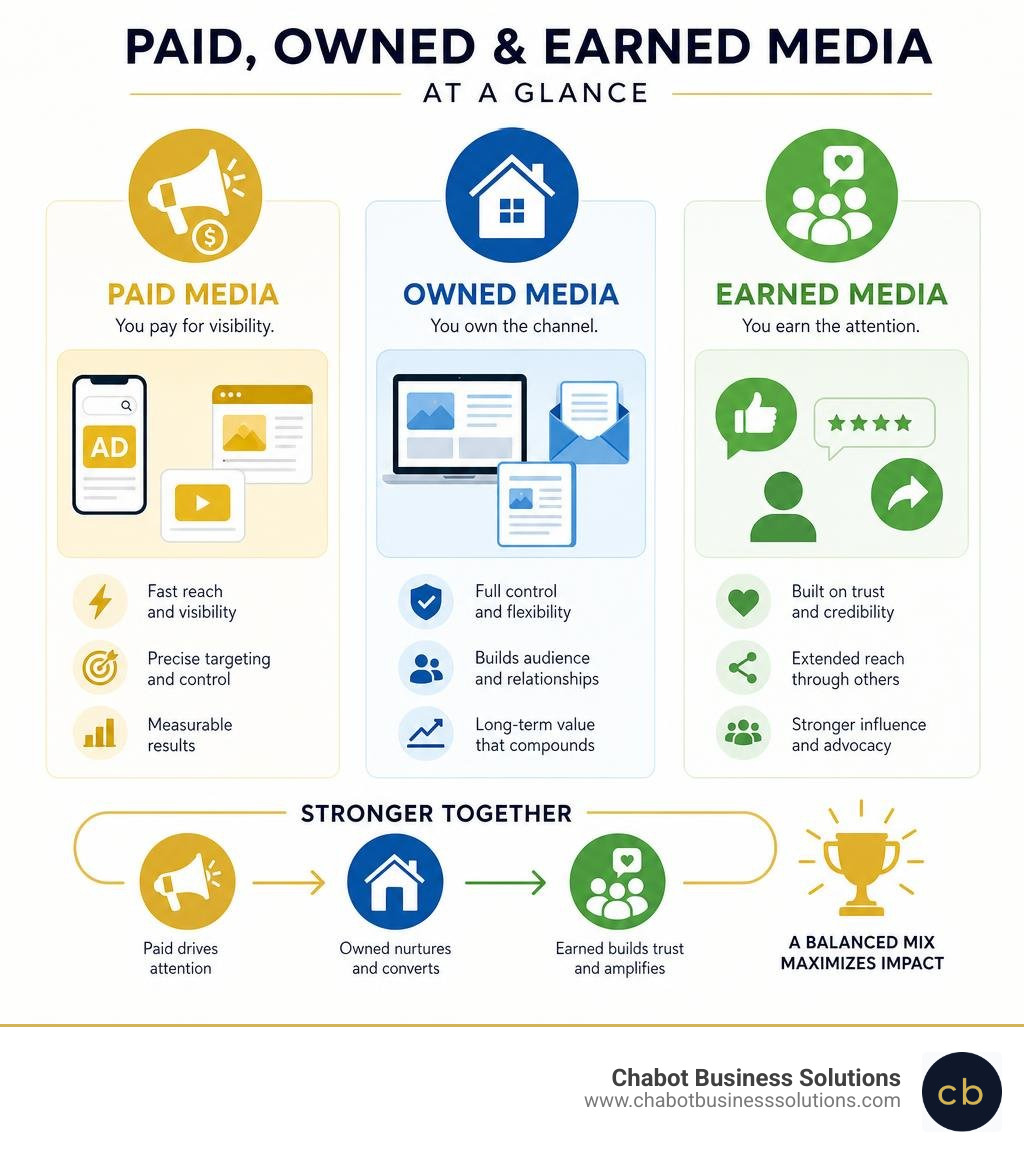
Paid advertising works best as one part of a broader marketing system:
- Paid media: You pay for reach, such as Google Ads or sponsored social posts.
- Owned media: You control the channel, such as your website, email list, and blog.
- Earned media: Other people share, review, recommend, or mention your business.
Paid media can drive fast attention, but owned content builds long-term value and earned trust can make the message more believable. A strong strategy connects all three instead of relying on one channel alone.
I am Alyx Lofton, founder of Chabot Business Solutions, with more than 20 years of hands-on experience in digital strategy, client growth, and operational execution. I help business owners use paid digital advertising as part of a clear, sustainable system for generating demand and making smarter growth decisions.
Core Channels and Strategies for Paid Digital Advertising

Navigating the modern ad ecosystem requires balancing different channels to meet buyers wherever they spend time online. A balanced mix prevents over-reliance on a single network and stabilizes your customer acquisition costs.
Major Formats in Paid Digital Advertising Campaigns
Every ad format serves a distinct purpose across your funnel:
- Search Engine Marketing (SEM / PPC): High-intent text ads placed on search engine results pages. You capture buyers actively looking for your exact solution via dedicated Services – Paid Advertising PPC.
- Paid Social Media: Visual and video ads embedded in user feeds across Meta, LinkedIn, and YouTube to build awareness and generate interest.
- Display Advertising: Visual banner ads placed across third-party websites to maintain brand recall and retarget previous site visitors.
- Influencer Partnerships: Sponsored endorsements that leverage established creator trust to introduce your product natively.
- Programmatic Advertising: Automated bidding technology that purchases ad inventory across millions of sites in real time based on audience behavior.
Paid Search vs Paid Social: Budget Allocation
Choosing where to put your ad dollars depends on buyer intent, offer maturity, audience size, and your own conversion data. Search campaigns are often strongest when people already know what they need and are comparing providers. Paid social is useful when your audience needs education, proof, or repeated exposure before they search directly for a solution.
Because platform costs and returns change by industry, season, location, creative quality, and tracking setup, avoid treating broad benchmark claims as fixed planning rules. Use current account data, platform reporting, and clean conversion tracking to decide how quickly to scale. Understanding SEO vs PPC: Choosing the Right Strategy for Your Business Growth helps allocate budgets between high-intent capture and social prospecting.
| Metric / Attribute | Google Shopping & PMax | Meta Advantage+ |
|---|---|---|
| Typical Role | Capture demand from people searching or shopping with clear intent | Generate discovery, interest, and repeat exposure in social feeds |
| Primary Cost Variable | Query competition, product category, landing page quality, and conversion value | Audience size, creative strength, placement mix, and engagement quality |
| Primary Strength | High-intent capture and search demand | Top-of-funnel discovery and prospecting |
| Best Early Signal | Search terms, product feed performance, conversion rate, and cost per conversion | Creative engagement, click quality, lead quality, and assisted conversions |
| Budget Planning Approach | Start with tightly structured campaigns and scale after conversion data is reliable | Test multiple creative angles and scale the winners after meaningful engagement and conversion patterns appear |
Advanced Attribution and Post-Cookie Tracking Methods
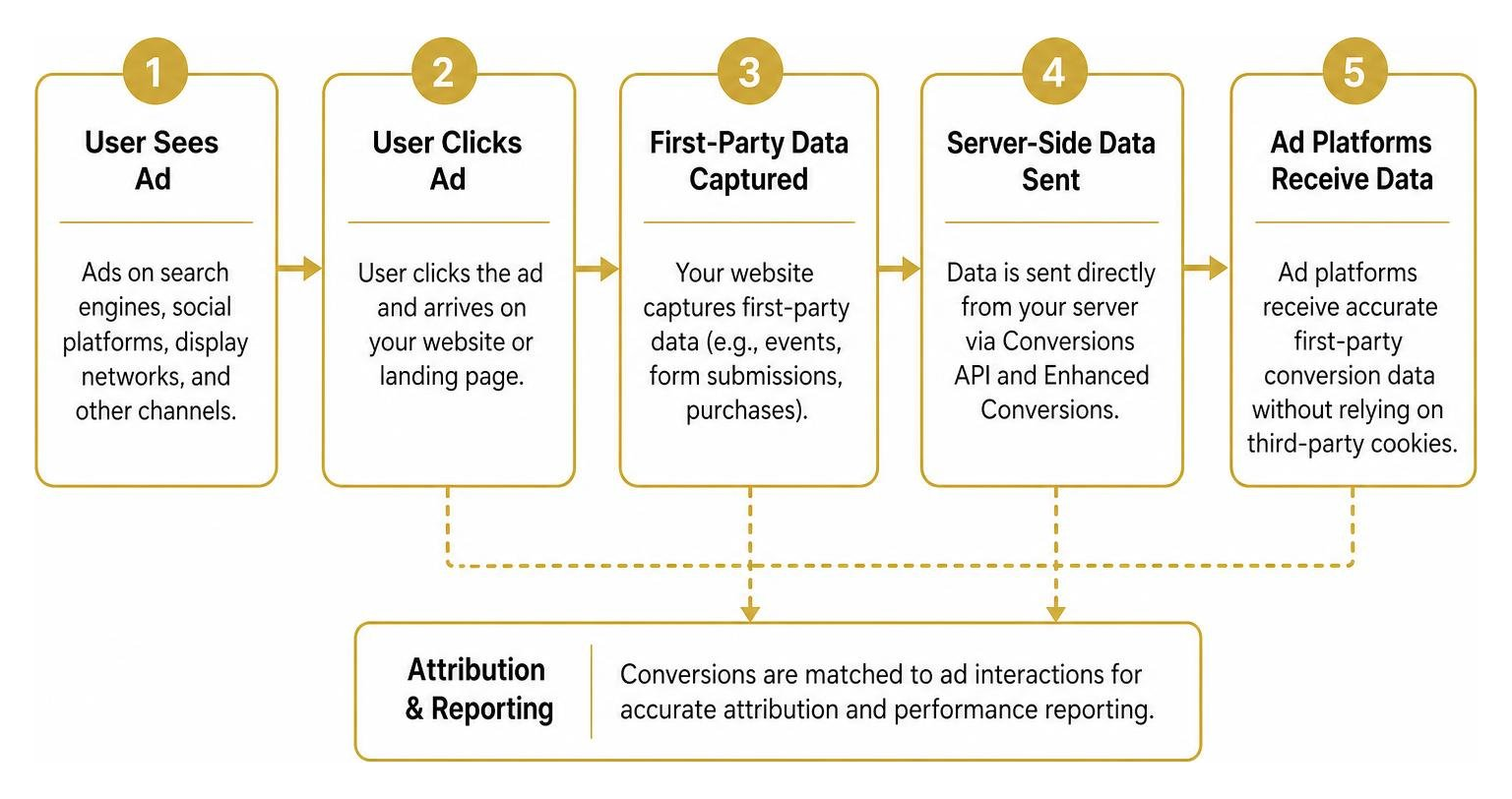
Third-party cookies no longer provide reliable tracking. Modern campaigns require server-side tracking, such as Meta’s Conversions API and Google’s Enhanced Conversions, to send accurate first-party conversion data directly from your server. Implementing robust data clean rooms and multi-touch attribution models ensures that every marketing touchpoint receives accurate credit. Combining clean data with professional landing pages prevents wasted ad spend; you can fix drop-offs using Stop Wasting Clicks with Professional Landing Page Development Services.
Building a High-ROI Paid Media Strategy for Long-Term Growth

A profitable campaign starts with clear goals and strict tracking. Setting SMART goals, defining buyer personas, establishing disciplined budget pacing, and refreshing creative assets every few weeks prevents ad fatigue and maintains conversion rates over time.
Optimizing Paid Digital Advertising with Smart Bidding and AI
Modern ad platforms rely heavily on machine learning to optimize bids in real time. Google Ads uses contextual signals like device, location, operating system, and time of day to match user intent with conversion likelihood, adjusting bids dynamically on every auction.
Reviewing official About Target CPA bidding – Google Ads Help guidelines will help you train smart bidding algorithms without overspending. Local businesses can learn tactical cost controls through How to Run Google Ads for Local Business Without Wasting Budget.
Integrating Paid Media with Organic Marketing for Synergistic Reach
Paid ads and organic marketing work best together. Search ads reveal high-converting search terms to inform your organic content strategy, while paid social amplifies your best-performing articles to wider audiences. Remarketing ads re-engage visitors who originally discovered your website through organic search, guiding them smoothly down the sales funnel.
Tracking shared metrics ensures balance; follow key metrics using SEO PPC Success KPIs Local Businesses Should Track. At Chabot Business Solutions, based in San Leandro, CA, we design focused, strategy-first marketing systems that simplify client acquisition for long-term stability.
Disclaimer: Marketing results, lead volumes, rankings, and revenue figures vary based on industry, budget, market conditions, and individual execution. Past performance does not guarantee future outcomes.
Ready to turn paid ads into a clear, profitable customer engine? Book your free strategy call with our team today and let us build a roadmap for your business.