What Is Paid Advertising — and Why It Matters for Your Business
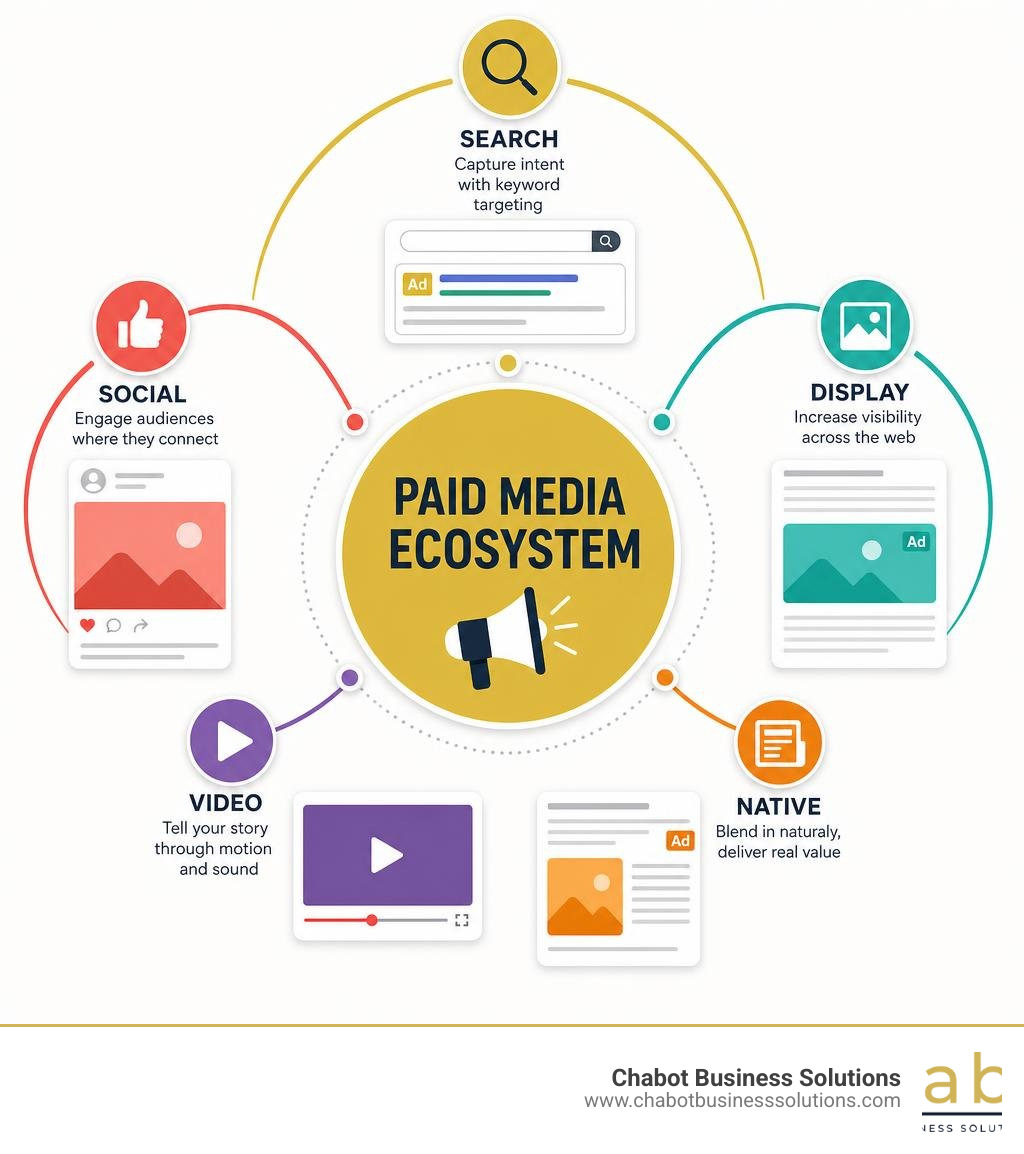
Paid advertising is a marketing model where businesses pay to show ads to a targeted audience across digital platforms like search engines, social media, and websites.
Here is a quick-reference breakdown of what paid advertising is and how it works:
| What It Is | How It Works | Common Formats |
|---|---|---|
| Paying to display ads to a targeted audience | Auction-based bidding system — higher quality ads win more placements | Search, social, display, video, native |
| Instant visibility, unlike organic content | Bid amount + ad quality + audience relevance = placement | Google Ads, Meta, LinkedIn, TikTok, YouTube |
| Budget-controlled and measurable | Set daily or lifetime budgets; pay per click, impression, or conversion | CPC, CPM, CPA, CPV pricing models |
Unlike SEO or content marketing — which can take months to gain traction — paid ads can put your business in front of ready-to-buy customers today. That speed and targeting precision is why paid advertising has become one of the most relied-upon tools in a business owner’s growth toolkit.
But here is the honest truth: paid advertising is not a magic button. Without a clear strategy, the right platform, and consistent optimization, it is easy to burn through budget with little to show for it. That is exactly what this guide is designed to help you avoid.
I am Alyx Lofton, founder of Chabot Business Solutions, and over more than 20 years working in digital strategy I have helped business owners build sustainable, measurable growth through paid advertising and the broader systems that support it. My goal here is to cut through the noise and give you a clear, practical cheat sheet you can actually use.
Demystifying Paid Advertising: Core Mechanics and Channels
To make paid advertising work for your business, we must first understand what goes on behind the digital curtain. Many business owners believe that running ads is as simple as writing a check to Google or Meta and waiting for the phone to ring. In reality, modern digital advertising runs on a highly sophisticated, real-time auction system.
Every single time a user loads a webpage, conducts a search, or scrolls through a social media feed, an ad auction occurs in milliseconds. The platform’s algorithm evaluates all competing advertisers who want to reach that specific user. But here is the secret: the highest bidder does not automatically win. Platforms care deeply about user experience. If they show spammy, irrelevant ads, users will leave. Therefore, the auction system determines ad placements based on a combination of:
- Your Bid Amount: The maximum amount you are willing to pay for an action (like a click or impression).
- Ad Relevance and Quality: How closely your ad matches the user’s intent or interests.
- Expected Engagement Rates: How likely the user is to click or interact with your ad based on historical data.
This means if your ad is highly relevant and engaging, you can actually win top placements while paying less than competitors with deeper pockets.
For local businesses in San Leandro and the wider East Bay, CA area, this auction dynamic offers an incredible opportunity. Instead of competing with massive national brands on broad terms, we can leverage hyper-local targeting and high-quality, tailored messaging to win valuable leads at a fraction of the cost.
Instant Traffic vs. Organic Growth
While organic marketing channels like search engine optimization (SEO) are vital for long-term credibility, they require a sustained, multi-month investment before delivering significant traffic. When you need immediate visibility—such as launching a new service, promoting a seasonal offer, or breaking into a new market—paid ads provide the instant traffic you need.
Understanding When and Why a Business Should Utilize PPC Advertising is key to balancing your marketing budget. By combining the immediate impact of paid channels with the compounding returns of organic strategy, you create a resilient marketing ecosystem that drives both short-term sales and long-term brand equity.
Paid Advertising in Search Engines (SEM)
Search Engine Marketing (SEM), commonly referred to as pay-per-click (PPC) search advertising, is the cornerstone of high-intent digital marketing. When someone goes to a search engine like Google or Bing and types in “best digital marketing agency in San Leandro,” they are actively looking for a solution. They have high search intent.
By positioning your business at the very top of these search results, you reach prospects at the exact moment they are ready to make a decision.
To explore how these solutions function directly, you can review the tools provided by Reach Customers & Sell More with Online Advertising – Google Ads and learn how to Reach More Customers with Paid Search Advertising – Google Ads.
Keywords, Match Types, and AI-Powered Smart Bidding
At the heart of any search campaign is your keyword strategy. Rather than targeting incredibly broad terms that exhaust your budget quickly, successful search campaigns rely on a mix of high-intent keywords and smart match types:
- Exact Match: Your ad only shows when a user searches for your exact keyword or very close variations. This offers the highest control but lower search volume.
- Phrase Match: Your ad shows for searches that include the meaning of your keyword. This strikes a great balance between reach and relevance.
- Broad Match: Your ad can appear on searches related to your keyword, even if the words do not explicitly appear.
In 2026, the industry has shifted heavily toward combining Broad Match with Smart Bidding. Google’s AI-powered Smart Bidding uses machine learning to analyze millions of signals in real time—such as the user’s location, device, time of day, and past search behavior—to adjust your bids automatically for maximum conversions.
For example, a local business in the East Bay might use broad match keywords alongside Smart Bidding to capture adjacent searches they never would have thought to bid on manually, driving up to 40% growth in conversion volume while maintaining a stable cost-per-acquisition. To set up your first campaign and explore these bidding options, you can visit Google Ads – Get Customers and Sell More with Online Advertising.
Social Media Paid Advertising and Native Formats
If search advertising is about capturing existing demand, social media advertising is about creating it. Social media platforms allow us to reach users when they are relaxed, browsing, and open to discovery.
The true superpower of social media advertising lies in its demographic, behavioral, and interest-based targeting. Because platforms collect vast amounts of user data, we can target individuals based on their job titles, life events (like moving or getting married), specific hobbies, and even offline purchasing behaviors.
Navigating the Major Social Platforms
Each social network caters to a distinct audience and mindset:
- Meta (Facebook & Instagram): With an average CPM of around $13.75, Meta remains a powerhouse for visual storytelling, local targeting, and retargeting. It is highly effective for both B2C and local B2B lead generation.
- LinkedIn: The gold standard for professional B2B targeting. You can target decision-makers by company size, industry, job seniority, and exact skills. For instance, using LinkedIn Text Ads | Advertise on LinkedIn allows you to place self-service PPC ads directly in front of highly targeted executive audiences on a flexible budget.
- TikTok: Ideal for capturing younger demographics with highly authentic, short-form video content. TikTok’s native ad formats blend seamlessly into the user’s feed, reducing ad blindness.
- Pinterest: A high-intent visual discovery platform where 85% of weekly users have made a purchase based on Pins they saw from brands. It is incredibly effective for e-commerce, home decor, and fashion.
The Power of Native Ads
Native advertising refers to ads that match the look, feel, and function of the media format in which they appear. Unlike intrusive pop-ups, native ads appear as sponsored articles, recommended content, or in-feed social posts.
The data speaks for itself: native ads can receive up to 53% more consumer views than traditional display ads and significantly increase purchase intent. They bypass traditional banner blindness because they offer genuine value or entertainment within the user’s natural browsing flow.
When deciding where to allocate your budget, it helps to understand the distinct roles of search and social. Reading our breakdown on Google Ads vs Social Media Ads: What a PPC Agency Can Do for You will help you determine the optimal mix for your specific business goals.
Display, Video, and Programmatic Ads
Display and video advertising represent the visual vanguard of your digital marketing presence. While search ads rely on text to capture immediate needs, display and video ads use striking imagery, motion, and audio to build brand awareness, introduce new concepts, and stay top-of-mind.
Display Ads and the Google Display Network (GDN)
Display ads are the visual banners, images, and rich media placements you see while reading articles on news sites, checking blogs, or using mobile apps. The Google Display Network alone spans over 35 million websites and apps, allowing you to place your brand in front of users even when they aren’t actively searching.
While display ads typically yield lower click-through rates (CTR) than search ads, they are incredibly cost-effective for building brand familiarity and executing retargeting campaigns—showing ads specifically to people who have already visited your website but did not convert.
Video Advertising: YouTube and Beyond
Video has officially crowned itself the most engaging medium online. Over 90% of marketers report that video ads have helped them increase brand awareness, traffic, and sales. This is largely driven by platforms like YouTube, which boasts over 2.7 billion monthly active users.
Whether you run skippable pre-roll ads, non-skippable mid-roll ads, or short-form YouTube Shorts ads, video allows you to explain complex services, showcase product utility, and build emotional connections with your audience far faster than text alone.
Programmatic Advertising and App Store Placements
Programmatic advertising automates the buying and selling of ad inventory in real time using algorithmic software. Instead of negotiating directly with individual websites, programmatic platforms use data to buy ad space across thousands of sites instantly, targeting specific user profiles rather than static web pages. This strategy is highly effective for businesses with larger monthly budgets (typically $10,000+) looking for sophisticated audience targeting.
Additionally, niche platforms offer highly specialized paid opportunities. For example, if you are promoting a mobile app, you can Create Campaigns – Help – Apple Ads to place your app directly at the top of App Store search results, capturing users at the precise moment they are looking for new software to download.

Pricing Models and Budgeting Strategies
To keep your paid advertising campaigns profitable, you must master the financial structures that govern them. Digital ad platforms offer several primary pricing models, each suited to different campaign objectives. Choosing the wrong model can lead to wasted budget and skewed performance data.
The Four Core Pricing Models
- CPC (Cost Per Click): You only pay when a user actually clicks on your ad. This is the gold standard for lead generation, search campaigns, and direct-response marketing where the primary goal is driving traffic to a landing page.
- CPM (Cost Per Mille / Thousand Impressions): You pay a flat rate for every 1,000 times your ad is displayed, regardless of whether anyone clicks. This is ideal for brand awareness and display campaigns where maximum visibility is the priority.
- CPA (Cost Per Acquisition / Action): You pay only when a user completes a specific conversion action, such as signing up for a trial, downloading an ebook, or making a purchase. This model relies heavily on robust tracking and machine learning.
- CPV (Cost Per View): Primarily used in video advertising (like YouTube), where you pay when a user watches a set portion of your video (typically 30 seconds or the full duration if shorter) or interacts with it.
To help you easily compare these options, we have compiled this quick-reference table:
| Pricing Model | Best Used For | Primary Benefit | Key Metric to Watch |
|---|---|---|---|
| CPC (Cost Per Click) | Search Ads, Direct Response, Lead Generation | You only pay for active interest/website visits | Click-Through Rate (CTR) |
| CPM (Cost Per Thousand) | Brand Awareness, Local Visibility, Display | High volume of views at a relatively low cost | Frequency & Reach |
| CPA (Cost Per Action) | E-commerce Sales, High-Value Leads, Sign-ups | Directly aligns ad spend with bottom-line revenue | Conversion Rate |
| CPV (Cost Per View) | Video Ads, Product Demos, Brand Storytelling | Ensures budget is spent on engaged video viewers | View Rate & Watch Time |
Setting Budgets and Bidding Smartly
When launching a campaign, we recommend starting with a conservative, focused budget. Rather than spreading your ad spend thin across five different platforms, pick one or two channels that align perfectly with your target audience’s habits.
To prevent runaway spending, always set daily budget limits and utilize lifetime campaign caps. If you are a local service provider in San Leandro, CA, for instance, you might allocate a modest daily budget of $30 to $50 on Google Search ads targeting highly specific local keywords. As the data rolls in and you identify which search terms are generating actual revenue, you can confidently scale your budget upward.
Launching, Measuring, and Optimizing Campaigns
Creating a successful paid advertising campaign is a structured process that requires careful preparation before you ever click “Publish.” If you skip the foundational steps, you risk optimizing your campaigns against broken or incomplete data.
1. Establish Clear Conversion Tracking
Before writing ad copy or selecting keywords, you must install the platform’s tracking pixel (such as the Google Tag or Meta Pixel) on your website. This snippet of code tracks what users do after clicking your ad. If you cannot track whether an ad click resulted in a phone call, form submission, or sale, you cannot measure your return on investment (ROI).
2. Design High-Converting Landing Pages
One of the most common pitfalls we see in digital marketing is sending paid traffic directly to a generic homepage. Your homepage likely contains dozens of links, distractions, and broad information.
Instead, direct your ads to dedicated, high-converting landing pages that deliver exactly what the ad promised. If your ad promotes “Emergency AC Repair in East Bay, CA,” your landing page should feature a prominent headline about emergency AC repair, local testimonials, and a clear, immediate call-to-action (CTA) like an easy-to-use booking form.
3. Develop Compelling Ad Creatives and Copy
Your ad creative is what stops the scroll or catches the eye. We recommend launching every campaign with 3 to 5 distinct creative variations. Test different headlines, emotional hooks, and visual formats (such as static images versus short-form videos). This allows the platform’s algorithm to test variations and automatically serve the top-performing combinations to your audience.
4. Continuous Optimization and A/B Testing
Paid advertising is never a “set-it-and-forget-it” endeavor. To keep your cost-per-click down and conversion rates up, you must perform regular maintenance:
- A/B Test Elements: Test one variable at a time (like a button color or headline copy) to see what drives better engagement.
- Negative Keywords: In search campaigns, review your search term report weekly and add irrelevant search terms as negative keywords so you stop paying for useless clicks.
- Creative Refresh: Refresh your visual assets every 2 to 3 weeks to prevent “ad fatigue,” which occurs when your target audience sees the same ad too many times and stops paying attention.
To understand what happens when these crucial steps are missed, read our analysis of What Mistakes Businesses Make Without a PPC Agency.
Navigating Privacy, First-Party Data, and 2026 Trends
As we navigate June 2026, the digital advertising landscape has undergone massive shifts due to privacy regulations and the depreciation of third-party cookies. Advertisers can no longer rely solely on third-party tracking to target precise audiences.
To succeed today, businesses must prioritize the collection of first-party data—such as email lists, customer transaction histories, and direct opt-in information. By feeding this clean, privacy-compliant first-party data back into ad platforms, you can build powerful “lookalike” audiences that mimic your best existing customers.
Furthermore, integrating your paid campaigns with your organic strategy is no longer optional. Rather than viewing them as competing channels, we use them synergistically:
- We use paid search data to identify high-converting keywords, which we then target with long-term SEO content.
- We run retargeting ads to capture and convert organic website visitors who left without taking action.
To learn more about balancing these two powerhouses, check out our guide on Search Engine Optimization vs PPC: Which is Right for Your Business.
KPIs That Matter
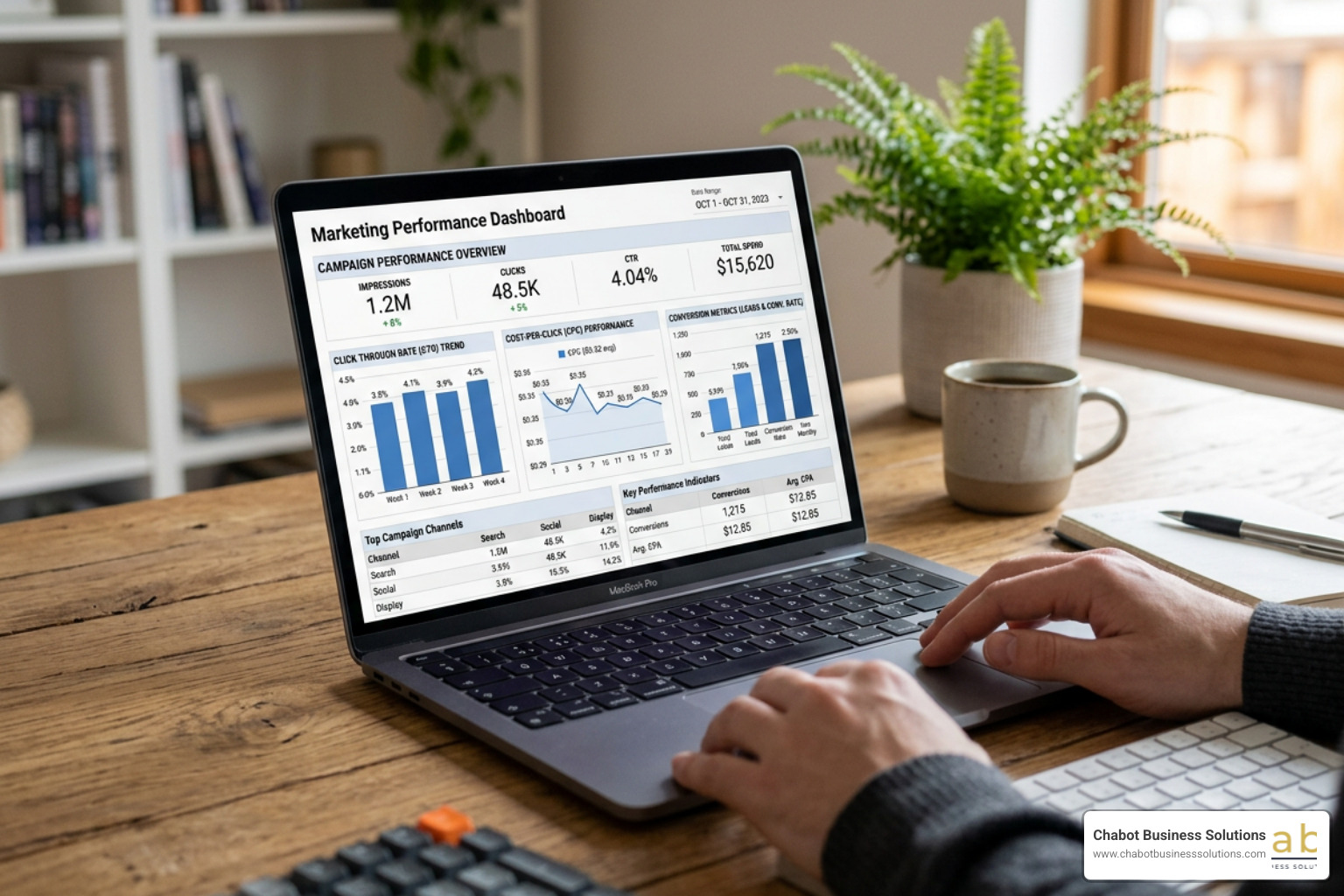
When measuring the success of your campaigns, avoid getting distracted by “vanity metrics” like impressions or likes. Instead, focus on the KPIs that directly impact your bottom line.
To help local business owners track what truly moves the needle, we have mapped out the essential SEO & PPC Success KPIs Local Businesses Should Track. Tracking metrics like Cost Per Acquisition (CPA), Conversion Rate, and Return on Ad Spend (ROAS) ensures your marketing budget is actively fueling business growth.
Frequently Asked Questions About Paid Campaigns
How much does paid advertising cost for small businesses?
One of the greatest benefits of digital paid advertising is its complete budget flexibility. Unlike traditional media like TV or print, there are no high minimum entry barriers. You can start with as little as $5 or $10 a day on platforms like Meta or Google.
Most small businesses in the East Bay area begin with a monthly budget of $1,000 to $3,000 spread across their primary channels. This budget allows for sufficient data collection to see what works, without exposing the business to high financial risk. You stay in full control of your daily spending limits, and you can pause or adjust your campaigns at any moment.
Do I need a website to run paid ads?
While having a dedicated, optimized website or landing page is highly recommended for maximizing conversion rates, it is not strictly mandatory to get started. Many modern social media platforms offer native lead-generation formats.
For example, Meta and LinkedIn support “Lead Gen Forms” that open directly within the app, allowing users to submit their contact information without ever leaving the platform. Additionally, e-commerce brands can leverage Instagram and TikTok Shops to sell products directly inside the social feeds. However, for long-term brand authority and complete control over your customer data, building a dedicated digital destination remains the best practice.
How often should I optimize my ad campaigns?
We recommend reviewing your active campaigns at least once or twice a week. During these check-ins, you should look for immediate red flags, such as sudden drops in click-through rates, budget overspends, or irrelevant search queries.
However, avoid the temptation to make major structural changes to your campaigns daily. Ad platform algorithms require time and a steady stream of data (usually 7 to 14 days of uninterrupted running) to exit their “learning phase” and optimize bidding. Making changes too quickly resets this learning process and can destabilize your performance.
Conclusion: Crafting a Strategy-First System for Sustainable Growth
At the end of the day, paid advertising is incredibly powerful, but it is only one piece of a much larger puzzle. Throwing money at Google or Meta without a cohesive, strategy-first system is a fast track to wasted ad spend.
If you are seeing signs that your current marketing efforts are falling flat, it might be time to bring in professional support. To help you evaluate your current position, we have compiled 6 Signs Your Business Needs a PPC Agency Now.
At Chabot Business Solutions, located right here in San Leandro, CA, we don’t believe in cookie-cutter marketing. We design focused, clarity-driven marketing systems tailored specifically to your business goals. Our strategy-first approach ensures that every dollar you invest in paid ads works in perfect harmony with your website, your organic presence, and your sales process to support sustainable, predictable growth.
If you are ready to stop guessing and start scaling with a professional, high-performing digital system, explore our Chabot Business Solutions Paid Advertising Services today. Let’s build a clear path to your business growth together. For a deeper look at how we tie these elements into a comprehensive roadmap, read about Maximizing ROI with a Professional Digital Marketing Strategy.